Fiona Stewart, MB BS (Syd) BSc (UNE) FACBS MACLM
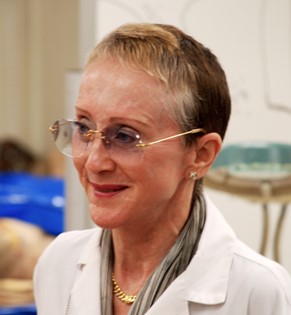
Fiona Stewart, MB BS (Syd) BSc (UNE) FACBS MACLM
A member of many specialty committees, including Chair of Royal Australasian College of Surgeons (RACS) Surgical Sciences Anatomy Examinations Committee, an invited teacher and consultant at training courses, Fiona has taught throughout Australia, New Zealand and in USA (UC San Francisco, and Meharry Medical College, Tennessee).
Author of 3 books, she has contributed to numerous publications, and is recipient of many awards for excellence of teaching and courses, and for regional business promotion. She was awarded the RACS Medal for Excellence of Service and the RACS Heslop Medal.
Fiona Stewart began teaching anatomy through dissection at the University of Sydney as a medical student. Leaving school to work at 13, she rode as a jockey and worked as a woolclasser and ‘expert’ while undertaking correspondence education, matriculated, studied veterinary science and medicine, graduating MB.BS. with a 2-year exemption, she was appointed to Royal Prince Alfred Hospital and Royal Alexandra Children’s Hospital, NSW, Australia. Engaged in surgical and clinical work, she continued to empower students and trainees with anatomical knowledge. As a committee member and later Undergraduate Vice-president of Sydney University Medical Society, Fiona initiated the import of various texts, which continue to be the foundation of many anatomical courses within NSW and Australia.
From 1988, as research supervisor, she has contributed to numerous publications by her students. Annually, Fiona has attended surgical specialty, dental, plastination, and anatomy meetings, and made international visits to laboratories to learn and collaborate. She has brought students to meetings in Australia, New Zealand, Britain, Europe, Japan, Canada and USA as poster and platform presenters.
From 1986 to 2008, while working in surgery and at University of Sydney, she co-ordinated and taught clinically applied regional anatomy by dissection to medical and dental students. She designed and delivered an annual RACS State Branch intensive whole cadaver dissection course; postgraduate cadaver courses in head and neck, maxillo-facial, thorax, abdomen, pelvic floor, limbs, spine, flap and digit graft-harvest and anastomoses, specialty endoscopic, dental implant placement in embalmed cadavers (using scanned-image treatment planning, bone and soft tissue harvest/graft,‘ sinus-lift’ teaching) and collaborated in investigation of bio-compatible 3D printed body ‘parts’. From those courses came candidates for research, publications, and conference presentations.
The Foundation Professorial Appointment in Anatomy, 2008, at the School of Rural Medicine, University of New England (UNE), Australia, tasked to teach prescribed anatomy in its problem based learning (PBL) curriculum; provide its students with an ‘elective’, extra-curricular whole cadaver dissection course emphasising regional anatomy and its clinico-pathological application; establish an intensive whole cadaver, regional with application, postgraduate dissection course; prepare prosections; conduct and publish anatomically-based research.
An internationally certified anatomical embalmer; state government ‘pathology-medical referee – cremations’; and a NSW Police Service Forensic Medical Officer, she established and administered a body donor programme and memorial ceremony, and a neurosurgical training laboratory using flexible cadavers with in-situ fixed brains at UNE. Some students who sought training as certified embalmers became casual-employee lab-techs. Indeed, Fiona has utilised many medical and dental students with an enthusiasm for teaching and anatomy, to aid her in dissection courses, to various audiences.
During the 1990s, Australian reports of increased medical malpractice litigation, considered to be result of anatomical ignorance among graduates of ‘new curricula’ medical courses, appeared. Fiona compiled evidence related to anatomical teaching and evidence of procedural anatomical ignorance evident at coronial inquest in pathology photographs, tendered interventional images, and post- mortem reports.
Fiona has a tireless approach to education of students of all levels, and her teaching is centered on clinical / surgical relevance. In all of her courses there has been emphasis on clinicians / surgeons to assist at the dissection table.
Biography by Michael Hornby, BDS GradDipClinDent (Sedation) GradCertAnat (Surg&Radiol)
